- Crop / use
- Before corn or soybean
- Research
- 5 linked sources
- Production options
- Conventional + organic options
What the research measured
The cited long-term Iowa study measured roughly half as much nitrate loss through tile drains with rye. Following-crop yield responses differed by crop and management; the linked studies report corn yield reductions under some establishment and termination practices.
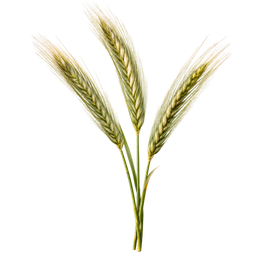
Two peer-reviewed meta-analyses, a 90,000-field satellite study, a four-site three-year Iowa N-rate trial, 19-year USDA-ARS drainage plots and a 70 site-year Iowa on-farm dataset.5 independent sources.What it is. Winter rye drilled or broadcast after harvest to hold soil, take up leftover nitrate and suppress weeds until it is terminated ahead of the next crop. More than 85% of Iowa cover-crop acres.
Study conditions and limitations
- In the Iowa State 2018–22 project, rye killed 3 days before planting made twice the biomass but cut corn yield 4.1% versus a 14-day kill.
- Broadcast rye made 3.5 times the biomass of drilled rye in the same project but 7.2% less corn yield.
- Planting green is low-risk for soybean, not corn: Iowa on-farm strips gained 3–11 bu/ac of soybean in 10 of 31 site-years, while corn lost an average 19 bu/ac in the 4 site-years that responded.
- Rye residue releases under 10 lb N/ac in the four weeks after corn planting; Nebraska and Iowa State recommend 30–50 lb/ac of starter N, and those sources do not advise a reduction in the corn N rate.
- The corn drag is worst on better soils, in cooler mid-seasons and dry springs; the nitrate benefit depends on spring growth and was absent where biomass stayed low.
- Economics: Iowa State CARD estimates net returns of −$30 to −$69 per acre for rye before corn without grazing or cost-share.
Read the sources · 5
- Corn yield response to winter cover crops: an updated meta-analysis ↗
Across 268 observations from 65 studies (1965–2015), grass covers such as rye neither raised nor lowered corn yield on average. Legume covers raised corn yield 30–33% only where fertilizer N was low or the system was no-till.
- Recent cover crop adoption is associated with small maize and soybean yield losses in the United States ↗
Satellite yield maps for more than 90,000 Corn Belt fields in 2019–20: an average corn yield loss of 5.5% on fields cover-cropped three or more years and a 3.5% soybean loss, versus non-adopting fields. Corn losses were larger on better soils, in cooler mid-seasons and with low spring rainfall.
- Corn Nitrogen Fertilization Requirement and Corn–Soybean Productivity with a Rye Cover Crop ↗
In no-till corn–soybean plots at four Iowa sites (2009–11), corn yield at the economic optimum N rate was 6% lower after rye even though rye biomass peaked at only 1,280 kg/ha; the optimum N rate itself did not change. Soybean yield was unaffected.
- Long-term conservation practices reduce nitrate leaching while maintaining yields in tile-drained Midwestern soils ↗
Over 19 years (2002–20) of tile-drained corn–soybean plots in Iowa, an annual rye cover crop cut nitrate leaching 59% with minimal or no yield penalty.
- National Farmer Survey Documents a Wide Range of Cover Crop Benefits as Acreage Continues to Expand ↗
Among 1,172 farmer respondents, self-reported 2019 yields after cover crops were 2% higher for corn and 5% higher for soybean. The most common seed-cost bracket was $11–15/ac.
Before you buy, ask
- What seeding rate, date, and termination timing did the cited studies use?
- How does termination timing before my cash crop change the nitrogen and moisture picture?
- Which species or mixture fits my rotation window and equipment?
Record
- Sources checked
- September 26, 2026. Every figure shown is printed on the linked page; unit conversions are noted on the chart.
- Company response
- None yet. Makers and suppliers of this product can send corrections, additional trials, or a statement; it is published here, labelled, and never edits the research summary. Send a correction →