What the research measured
A 73-experiment Midwest study reported no average yield response on fields with recent soybean history. Other cited studies describe responses on fields without recent soybean production. Crop history, soil conditions, and existing rhizobia populations differ across these studies.
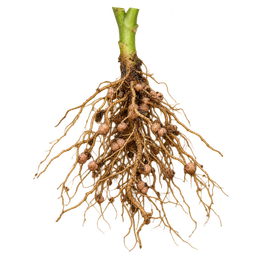
A nine-author, five-state, 73-experiment peer-reviewed study plus 27 Ohio trials and 17 Nebraska on-farm trials; an industry-authored 187-trial analysis is also linked.4 independent sources · 1 manufacturer-authored, labelled.What it is. A live culture of Bradyrhizobium japonicum, the bacterium that forms nitrogen-fixing nodules on soybean roots, applied to the seed or in-furrow at planting.
Study conditions and limitations
- Response is near zero where soybean has been grown recently because naturalized rhizobia persist; the exceptions are new ground, more than three to five years since soybean, pH below 6.0, high sand content, or flooding for more than a week.
- Flooding advice is unsettled: Wisconsin fields flooded three weeks in 2008 showed no response to inoculant in 2009, while BASF says rhizobia can die within three to seven days under water.
- On first-time soybean ground nodulation can still fail even with correct inoculation; Ohio State notes 75 lb N/ac as urea added 8–12 bu/ac in that situation.
- Inoculants are living products: colony counts are guaranteed only to the expiry date and for a limited time on treated seed, so storage and seed-treatment compatibility matter.
Read the sources · 5
- Probability of yield response to inoculants in fields with a history of soybean ↗
Fifty-one products in 73 experiments across Indiana, Iowa, Minnesota, Nebraska and Wisconsin (2000–08) on fields with soybean history: no yield response different from zero at 63 environments. Break-even probability at $0.33/kg soybeans was 59% in Nebraska, 36% Wisconsin, 25% Minnesota, 25% Indiana and 4% Iowa.
- Making Data-Driven Decisions on Soybean Inoculation ↗
In 17 Nebraska on-farm inoculant studies from 1992 through 2016, only one (Saunders County, 2002) showed a yield increase, about 2 bu/ac. Inoculant cost $0.44–4.00 per acre; the authors advise growers with recent soybean history to spend it elsewhere.
- Rhizobium Inoculation ↗
Across 27 Ohio trials (10 locations, six products) on fields already in soybean, inoculant averaged +1.5 bu/ac, reportable only at 70% confidence. On first-time soybean fields nodulation is often inadequate even with good inoculation.
- Soybean Inoculation: When, Where, and Why ↗
Where soybean has never been grown, Nebraska measured a 49 bu/ac response in 1984, with 1–10 bu/ac more typical; most university guidelines say to inoculate if it has been more than three to five years since soybean.
- Soybean Response to Inoculation with Bradyrhizobium japonicum in the United States and Argentina ↗
Across 187 US trials, mostly on fields with soybean history, inoculation raised yield an average 60 kg/ha (1.67%), against 6.39% in Argentine trials where more fields lacked soybean history. The authors work for inoculant makers.
Before you buy, ask
- Is the formulation and application method I would buy the one that was tested?
- Was the comparison a yield gain at the same nitrogen rate, or held yield with less fertilizer?
- What happens to my result if I cut nitrogen and the product does not fix enough?
Record
- Sources checked
- September 26, 2026. Every figure shown is printed on the linked page; unit conversions are noted on the chart.
- Company response
- None yet. Makers and suppliers of this product can send corrections, additional trials, or a statement; it is published here, labelled, and never edits the research summary. Send a correction →